Blog
What Safety and Compliance Checks Should a New Boiler Have?
A boiler installation is not finished when the boiler turns on
A boiler can fire up and provide heat while still having an installation fault that needs attention. Safety and compliance checks are the part of the job that confirms the appliance has been installed correctly, operates as intended and is suitable for the property around it.
For homeowners in Greenwich, Blackheath, Charlton and surrounding areas, this means looking beyond whether the radiators become warm. A proper installation considers the gas connection, the route and termination of the flue, combustion, system pressure, controls and the way the boiler interacts with the rest of the heating system.
Our Boiler Installation work is carried out as Gas Safe Registered gas work. That matters because the checks need to be completed by someone competent to assess combustion appliances, not simply by someone who can connect pipes and mount a boiler on the wall.
What is checked during a compliant installation?
1. The gas supply and appliance connection
The engineer checks that the boiler is connected correctly and that the gas supply is appropriate for the appliance. Pipework needs to be suitable, secure and free from obvious installation defects. The connection must also be tested so that the boiler is receiving gas safely and operating within the manufacturer’s requirements.
This is particularly important when replacing an older boiler. Existing pipework may have been installed for a different appliance, or may need alteration because the new boiler has different connection requirements. Reusing a route without assessing it can create problems that are not visible once the installation is complete.
2. The flue and combustion performance
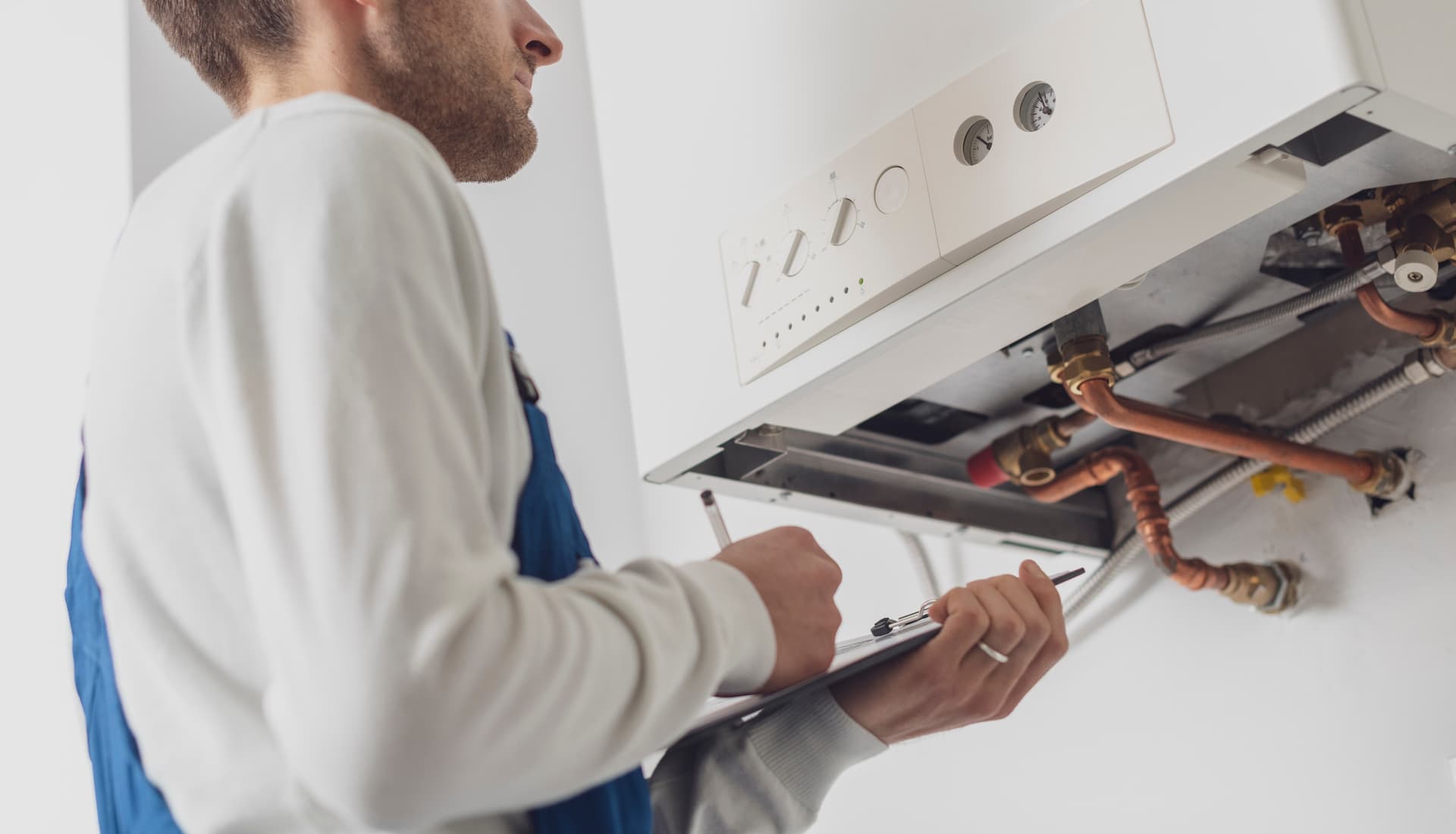
During our installations, we check the flue (the pipe that carries waste gases away from the boiler), including its route, joints, support and outside end. The engineer checks that the flue has been installed in accordance with the appliance instructions and that its position is suitable for the property.
We then test how safely the boiler is burning gas. The appliance may appear to run normally while combustion is not properly adjusted, so this cannot be judged by sound or temperature alone. Testing equipment gives the engineer evidence that the boiler is operating safely rather than relying on appearance.
If the flue route is difficult to inspect, access arrangements may affect how the work is completed. This is one reason a survey of the property is more useful than treating every replacement as identical.
3. Pressure, circulation and system operation
A new boiler has to work with the heating system it is connected to. The engineer checks the system pressure and confirms that water is circulating through the radiators and hot water circuit as intended. Where existing components remain in place, their condition and compatibility can affect the result.
We look for poor circulation, which can leave some radiators cooler than others, make the boiler switch on and off more often than it should, or create noise. These symptoms may not appear during a brief start-up, which is why the system should be run and observed rather than switched on for a few seconds before the engineer leaves.
We also check the condensate pipe, which carries away water produced when the boiler runs, to make sure it is secure and drains correctly. A poorly planned route can cause operational faults even when the boiler itself is working properly.
4. Controls and user operation
Compliance is not only about the appliance. Controls need to be connected correctly and tested so that you can operate the heating and hot water without confusion. The engineer should explain the controls, demonstrate the basic functions and make clear what the normal operating information means.
A clear handover helps prevent avoidable misuse. You should know how to adjust the temperature, set the heating controls and identify when the boiler is showing an unusual status or fault. Keep the operating instructions and commissioning records (the installation and testing record) with your property documents.
What should you expect to receive at handover?
At the end of the installation, you should expect the engineer to explain what has been checked and to provide the relevant paperwork for the appliance and installation. Keep these documents somewhere accessible. They can be useful if the boiler needs attention later, if the property changes hands or if another engineer needs to understand what was installed.
Ask questions before the engineer leaves if anything is unclear. A professional handover should cover the controls, normal pressure information, basic user operation and any limitations created by the existing heating system. You should not need to guess how to run a newly installed boiler.
Why Gas Safe registration matters
Gas appliances must be installed and checked by a suitably qualified person. We are Gas Safe Registered and work across Greenwich, Welling, Eltham, Kidbrooke, Lewisham and nearby areas. We also hold Vaillant Approved, Baxi Installer, Which? Trusted Trader and Checkatrade status, but the central safety point remains the same: gas work needs the right competence and proper testing.
If you are arranging a new boiler installation, ask what will be checked, what paperwork will be provided and how the controls will be explained. Contact McGrath Heating Services Ltd to discuss your property and request a clear quotation based on the installation required.
Other Articles